



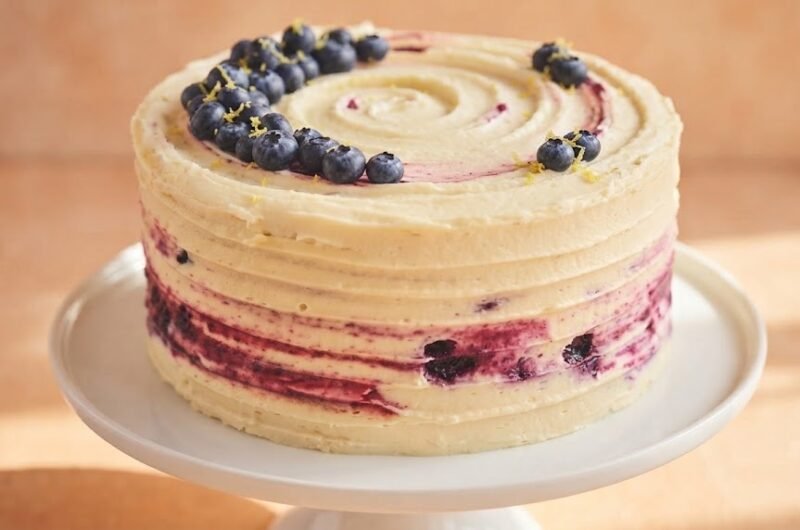
This Delia Smith Lemon and Blueberry Cake is a beautiful combination of bright lemon, juicy blueberries, soft sponge and creamy blueberry buttercream. It is light enough for an afternoon treat but pretty enough to serve when you have guests coming over.
The cake has two small, tender layers with blueberries baked throughout the sponge. Lemon zest and juice add freshness, while blueberry jam in the buttercream brings a deeper berry flavour and a lovely colour contrast.
If you enjoy classic lemon desserts, you may also like our Delia’s Lemon Drizzle Cake Recipe, especially when you want something simpler with the same fresh citrus character.
Why You’ll Love This Cake
There is a lot to like about this lemon and blueberry cake. It looks impressive, but the preparation is surprisingly straightforward.
- Fresh lemon flavour: Lemon zest and juice keep the sponge bright rather than overly sweet.
- Juicy blueberries: Fresh blueberries add little bursts of fruit throughout the cake.
- Soft and moist sponge: Greek yoghurt helps give the cake a tender texture.
- Creamy blueberry buttercream: Blueberry jam adds extra berry flavour between and over the layers.
- Small celebration cake: The two-layer size is ideal when you want a proper cake without making a huge batch.
- Air-fryer friendly: The sponge can be baked in an air fryer, making it a useful recipe for anyone who enjoys air-fryer baking.
The result is a cake that feels both homemade and special, with enough fruit and lemon to stop the buttercream from making it feel too heavy.
Ingredients You’ll Need
For the Lemon and Blueberry Sponge
- 135g (4.8 oz) softened butter, plus extra for greasing
- 100g (3.5 oz) full-fat Greek yoghurt, plus extra for serving
- 3 medium eggs
- Zest and juice of 1 lemon, plus extra zest for decoration
- 150g (5.3 oz) self-raising flour
- 135g (4.8 oz) golden caster sugar
- 150g (5.3 oz) blueberries, plus extra for serving
For the Blueberry Buttercream
- 250g (8.8 oz) unsalted butter, softened
- 500g (17.6 oz) icing sugar, sifted
- 1 teaspoon vanilla extract
- A little milk, as needed
- 3 tablespoons blueberry jam
For the most attractive finish, choose firm, ripe blueberries without bruised or damaged skins. Fresh lemon zest also makes the decoration look much brighter.
How to Make Delia Smith Lemon and Blueberry Cake
1. Prepare the Tins
Grease two 15cm (6-inch) round cake tins and line the bases with baking parchment. Make sure the tins are properly prepared before mixing the batter so the cake can go straight into them.
If you are using an air fryer, check that both tins fit comfortably and that air can circulate around them.
2. Make the Cake Batter
Add the softened butter, Greek yoghurt, eggs, lemon zest and juice, self-raising flour and golden caster sugar to a mixing bowl.
Use an electric whisk to combine everything briefly until you have a smooth, evenly mixed batter. Avoid overmixing once the ingredients have come together, as this can affect the final texture of the sponge.
The batter should be soft and spoonable rather than runny.
3. Add the Blueberries
Spoon half of the batter into the prepared tins, dividing it evenly between them.
Scatter half of the blueberries over the batter. Add the remaining batter on top, then finish with the remaining blueberries.
This layering method helps distribute the fruit through the cake instead of leaving all the blueberries sitting in one area.
4. Bake Until Golden
Bake the cakes in an air fryer at 140°C (284°F) for approximately 25–30 minutes, or until the sponges have risen, look golden and are beginning to pull slightly away from the sides of the tins.
Insert a skewer into the centre. It should come out clean or with only a few moist crumbs attached.
Because air fryers can vary considerably, start checking toward the end of the suggested cooking time rather than relying on the clock alone.
5. Cool and Prepare the Layers
Leave the cakes in their tins for around 10–15 minutes after baking. Carefully turn them out onto a wire rack and allow them to cool completely.
Once cold, check the tops. If necessary, carefully trim any domed areas so the layers sit neatly on top of one another.
Do not rush this stage. Buttercream melts and slides when spread over warm cake.
6. Make the Buttercream and Assemble
Beat the softened butter until smooth. Gradually add the sifted icing sugar and vanilla extract, beating until the buttercream becomes light and creamy. Add a small amount of milk if it needs loosening.
Use approximately 150g (5.3 oz) of buttercream to sandwich the cakes together, adding about 2 tablespoons of blueberry jam between the layers.
Cover the outside with the remaining buttercream. Finish with small dots or swirls of blueberry jam, then decorate with extra blueberries and finely grated lemon zest.

Variations and Substitutions
Make It More Lemon-Focused
For a stronger citrus flavour, add a little extra finely grated lemon zest to the buttercream or finish the cake with additional fresh zest.
Use Different Berries
Blueberries can be replaced with another berry if needed. Raspberries would provide a sharper flavour, while blackberries would create a deeper fruit profile.
Keep in mind that different fruits contain different amounts of moisture, so the texture may vary slightly.
Make a Simple Cake
If you prefer a less decorated cake, skip the elaborate buttercream finish and use a thinner layer between the sponges with a light coating on top.
Use a Different Jam
If blueberry jam is unavailable, another berry preserve can be used. The flavour will change, but the basic buttercream method remains the same.
What to Serve With Lemon and Blueberry Cake
This cake is lovely with a cup of tea or coffee, particularly as an afternoon dessert.
For something extra creamy, serve each slice with a spoonful of Greek yoghurt and a few fresh blueberries.
A light dusting of icing sugar can also work if you prefer a less rich presentation.

On a dessert table it pairs well with a no-bake lemon cheesecake. For a plainer option alongside, try Delia’s fatless sponge.
Storage and Freezing
Keep the finished cake in an airtight container in a cool room for a day or two. Refrigerate it if the weather is warm, then let slices come to room temperature before serving. Cold butter makes the cake taste firmer.
To freeze, wrap the unfrosted layers tightly and defrost them fully in the fridge before filling. Frosted slices can be frozen individually.
Nutrition Information
The following is an approximate estimate per serving when the cake is divided into 10 portions:
- Calories: approximately 640–670 kcal
- Protein: approximately 6–7g
- Carbohydrates: approximately 90g
- Fat: approximately 32–34g
- Fiber: approximately 1–2g
- Sugar: approximately 65–70g
Actual nutrition will vary depending on the exact brands of butter, yoghurt, icing sugar, jam and other ingredients used, as well as the final serving size.
Is This Cake Gluten-Free, Vegan or Dairy-Free?
As written, this cake is not gluten-free, vegan or dairy-free.
Gluten-Free
Self-raising flour contains wheat, so the original recipe is not gluten-free. To adapt it, use a suitable gluten-free self-raising flour blend designed for cakes.
Check all packaged ingredients, particularly the flour, baking products and jam, if you are preparing the cake for someone with coeliac disease or a serious gluten intolerance.
Vegan
The original cake contains butter, eggs, Greek yoghurt and milk, so it is not vegan.
A vegan version would require suitable plant-based butter, yoghurt, milk and an appropriate egg replacement. Because eggs contribute significantly to the structure of the sponge, the replacement should be one intended specifically for baking.
Dairy-Free
Butter, Greek yoghurt and milk make the original recipe unsuitable for a dairy-free diet. Use dairy-free baking butter and a suitable plant-based yoghurt and milk instead.
The substitutions may slightly change the flavour and texture, so test the adapted version before serving it for a special occasion.
Common Mistakes to Avoid
Using cold ingredients. Cold eggs and yoghurt stop the batter emulsifying, which leads to a curdled look and heavier crumb. Let everything sit out first.
Overmixing. Extra whisking after the flour goes in develops gluten and toughens the cake. Stop when the batter just comes together.
Raising the air fryer temperature. A hotter setting can brown the top before the middle sets. Keep it at 140°C and give it the full time.
Using tins that are too tight. Tins that crowd the basket block airflow and cause uneven baking. Leave a gap.
Frosting warm sponge. The buttercream slides and turns greasy. Wait until the layers are completely cold.
Getting the buttercream consistency wrong. Too stiff and it tears the sponge, too loose and it won’t hold the scraper pattern. Add milk a little at a time.
Can You Make This Recipe Ahead?
Yes. The sponge layers can be baked ahead and allowed to cool completely before assembling.
For the easiest preparation, keep the cooled layers covered until you are ready to decorate. Make the buttercream closer to assembly time so it remains smooth and easy to spread.
If preparing the entire cake ahead, keep it covered and chilled if necessary, then allow it to come closer to room temperature before serving so the buttercream softens.

Meal Prep: Is This Cake Suitable?
This is not traditional meal-prep food, but it can work well for planned desserts.
Slice the finished cake into individual portions and store them in an airtight container. This makes it easy to serve a consistent portion whenever you want a sweet treat.
For entertaining, you can also prepare the sponge layers ahead and decorate the cake closer to serving time.
Frequently Asked Questions
Can I make this lemon and blueberry cake without an air fryer?
Yes. The recipe can be adapted for a conventional oven, but the air-fryer method and timing should not be transferred directly because conventional ovens circulate heat differently. Use suitable cake-baking instructions for your oven and check the sponge with a skewer before removing it.
Can I use frozen blueberries?
Fresh blueberries are ideal for the original recipe. Frozen blueberries can be used as an alternative, but they may release more moisture into the batter. If using frozen fruit, avoid allowing it to become overly wet before adding it to the cake.
Why did my blueberries sink?
Blueberries can sink when the batter is too loose or when too much fruit is concentrated in one area. Layering the blueberries through the batter helps distribute them more evenly.
Can I make the cake less sweet?
The buttercream contributes a substantial amount of sweetness, so you can use a thinner layer if you prefer a lighter dessert. The lemon flavour can also be emphasized with additional zest to create a sharper contrast.
Can I make this cake in one larger tin?
The recipe is designed around two 15cm (6-inch) layers. Changing the tin size changes the depth of the batter and therefore the cooking time, so it is better to adjust the baking time carefully rather than simply using the original timing.
How do I get smooth buttercream?
Start with genuinely softened butter and beat it until smooth before gradually adding the sifted icing sugar. Add only a little milk at a time until the consistency is soft enough to spread.
Final Thoughts
This lemon and blueberry cake suits anyone who wants a celebration-worthy bake without much stress.
The sponge is tender, the fruit is generous and the jam-swirled buttercream looks impressive with little effort. It’s a good one for afternoon tea, a birthday or a weekend bake.
Delia Smith Lemon and Blueberry Cake Recipe
Course: CakesCuisine: British8-10
servings20
minutes30
minutes640
kcal40
minutes50
minutesA soft and fruity two-layer lemon and blueberry cake made with fresh lemon, juicy blueberries and Greek yoghurt, then filled and covered with creamy blueberry buttercream. A lovely dessert for afternoon tea, birthdays, or any special occasion.
Ingredients
For the Lemon & Blueberry Sponge:
135g (4.8 oz) softened butter, plus extra for greasing
100g (3.5 oz) full-fat Greek yoghurt, plus extra to serve
3 medium eggs
Zest and juice of 1 lemon, plus extra zest to decorate
150g (5.3 oz) self-raising flour
135g (4.8 oz) golden caster sugar
150g (5.3 oz) blueberries, plus extra to serve
For the Blueberry Buttercream:
250g (8.8 oz) unsalted butter, softened
500g (17.6 oz) icing sugar, sifted
1 teaspoon vanilla extract
A little milk, as needed
3 tablespoons blueberry jam
Directions
- Prepare the tins: Grease and line two 15cm (6-inch) round cake tins with baking parchment.
- Make the batter: Add the softened butter, Greek yoghurt, eggs, lemon zest and juice, self-raising flour and caster sugar to a bowl. Beat briefly with an electric whisk until everything is smoothly combined.
- Add the blueberries: Divide half of the batter between the prepared tins. Scatter over half of the blueberries, then add the remaining batter and finish with the remaining blueberries.
- Bake: Air fry at 140°C (284°F) for 25–30 minutes, or until risen and golden and a skewer inserted into the centre comes out clean.
- Cool the cakes: Leave the cakes in their tins for 10–15 minutes, then carefully transfer them to a wire rack to cool completely. Trim the tops if necessary.
- Make and assemble: Beat the softened butter until smooth. Gradually beat in the sifted icing sugar and vanilla, adding a little milk if needed. Sandwich the cakes with about 150g buttercream and 2 tablespoons blueberry jam. Cover the outside with the remaining buttercream and decorate with blueberry jam, fresh blueberries and lemon zest.
Notes
- Make sure the butter is softened before mixing.
- Serve with extra Greek yoghurt and fresh blueberries if desired.
- For the best flavour and texture, bring the decorated cake closer to room temperature before serving.


