



A good shortcrust pastry should be tender enough to cut easily, sturdy enough to hold a filling and crisp once baked. Delia Smith’s shortcrust pastry recipe follows a straightforward traditional method using plain flour, fat and cold water, with the technique doing much of the work.
The method forms part of Delia’s wider pastry teaching in her cookery-school material, where shortcrust pastry is included in the pastry, flour-based sauces and batters section. This recipe is from Delia’s Complete How to Cook.
This is a versatile pastry for pies, tarts and other baked dishes. If you’re making festive mince pies, you can also use this pastry in our mince pies recipe.
Why You’ll Love This Shortcrust Pastry
This is a useful pastry to have in your repertoire because it does not rely on complicated equipment or unusual ingredients.
- Simple ingredients: Plain flour, butter, lard, salt and cold water are all you need.
- Light texture: Gentle rubbing-in helps keep the pastry delicate rather than dense.
- Versatile: Use it for sweet or savoury pies and tarts.
- Make-ahead friendly: The uncooked pastry can be chilled or frozen for later use.
- Useful for festive baking: It makes a practical base for mince pies and other Christmas pastries.
- Traditional technique: The pastry is brought together gradually rather than adding a fixed quantity of liquid all at once.
Ingredients You’ll Need
This version makes approximately 500g (17.6 oz) pastry, enough for a generous two-crust pie or several smaller pastry cases depending on thickness and the size of the tin.
- 220g plain flour (7.8 oz)
- 55g butter (1.9 oz), softened
- 55g pure lard (1.9 oz), softened
- A pinch of salt
- Cold water, as needed, usually around 2–3 tablespoons
How to Make Delia Smith Shortcrust Pastry
1. Prepare the flour and salt
Sift the plain flour and salt into a large mixing bowl. Holding the sieve above the bowl helps aerate the flour, which contributes to a lighter pastry.
Cut the softened butter and lard into small pieces before adding them.
2. Work the fat into the flour
Use your fingertips to rub the fat into the flour. Work quickly and lightly rather than pressing or kneading the mixture.
Lift some of the mixture between your fingertips and allow it to fall back into the bowl as you work. Continue until you have a crumbly mixture with no large pieces of fat remaining.
The mixture does not need to look perfectly uniform. Avoid continuing to rub once the crumb stage has been reached.
3. Add the water gradually
Begin with about one tablespoon of very cold water. Sprinkle it around the mixture rather than pouring it into one spot.
Use a knife to cut through the mixture and begin bringing the crumbs together. Once the dough starts clinging together, use your fingertips to finish bringing it into a ball.
Add a few drops more water only if necessary. The finished dough should come together without leaving loose flour and crumbs around the bowl.
4. Rest the dough
Place the pastry in a covered container or food-safe bag and refrigerate for about 30 minutes.
This resting period is important because the flour’s gluten needs time to relax after the addition of water. Resting makes the dough easier to roll and helps reduce cracking.
5. Bring the pastry back to a workable temperature
When you’re ready to roll, take the pastry from the refrigerator and allow it to lose some of its chill if it is very firm.
Roll it on a lightly floured surface using a straight rolling pin. Keep the pressure gentle and roll backwards and forwards rather than repeatedly pushing from side to side.
For a round sheet, turn the pastry by quarter turns as you roll. This helps maintain an even shape.
6. Use immediately or prepare for storage
Roll the pastry to the thickness required by your pie or tart recipe. Avoid repeatedly gathering and rerolling scraps because excessive handling can make the pastry less tender.
Once rolled, transfer it carefully to the tin or use it according to your chosen recipe.

How Can We Make Delia Smith Sweet Shortcrust Pastry?
To make a sweet shortcrust pastry, combine 220g (7.8 oz) plain flour with 35g (1.2 oz) caster sugar and a pinch of salt, then rub in 55g (1.9 oz) softened butter and 55g (1.9 oz) lard until the mixture resembles fine breadcrumbs.
Gradually add about 2–3 tablespoons of cold water, using a knife to bring the mixture together without overworking it.
Gently form the dough into a ball, wrap and chill for about 30 minutes, then roll it out on a lightly floured surface and use it for your favourite sweet pies, tarts or pastries.
Recipe Variations and Substitutions
Vegetarian shortcrust pastry
For a vegetarian version, replace the lard with an equivalent amount of vegetarian baking fat or use butter.
The result will not be identical to the butter-and-lard version, but the same rubbing-in and resting principles apply.
All-butter pastry
You can also make an all-butter pastry by replacing the lard with an equal weight of butter. Expect a more pronounced buttery flavour and a somewhat different texture.
Food processor method
A food processor can help with the initial flour-and-fat stage, particularly if you prefer to work with colder fat.
However, Delia’s guidance is not to rely on a food processor for the entire process because it is difficult to judge the precise amount of water needed without feeling the dough. She recommends processing the flour and fat briefly, then transferring the mixture to a bowl and adding the water gradually by hand.
What Can You Use This Pastry For?
Once you’ve mastered this dough, it becomes useful far beyond one recipe.
Try it for:
- Mince pies
- Fruit pies
- Jam tarts
- Plum Jam
- Apple pies
- Custard or fruit tart cases
- Savoury pies
- Quiches and tarts
- Small individual pies

Nutrition Information
Approximate nutrition for the whole batch of pastry is difficult to state precisely because the final amount of water and the exact fat products used can vary.
For a rough estimate, a batch made from 220g plain flour, 55g butter and 55g lard contains approximately:
- Calories: 1,600–1,700 kcal
- Protein: about 20g
- Carbohydrates: about 165g
- Fat: about 95g
- Fibre: about 6g
- Sugar: about 1g
- Salt: dependent on the amount and type of salt and butter used
These are estimates rather than laboratory-tested values. The figures will change with different brands, fat choices, flour and serving sizes.
Can You Make This Recipe Ahead?
Yes. Shortcrust pastry is well suited to advance preparation.
The uncooked pastry can be refrigerated after it has been made. Delia’s guidance states that it can keep for up to three days in the refrigerator when properly enclosed, although it should be allowed to return towards room temperature before rolling if it has become very firm.
Unbaked pastry can also be frozen for up to three months, according to the same guidance.
For busy Christmas baking, making the pastry ahead can make assembling mince pies much easier.
How to Store this Pastry
Keep unused raw pastry well covered in the refrigerator so that it does not dry out or absorb strong food odours.
If freezing, wrap it securely and protect it from freezer air. Thaw it in the refrigerator before using, then allow it to become workable enough to roll.
Once pastry has been baked, storage depends on the finished recipe and its filling. A plain baked pastry case can be stored differently from a filled pie containing dairy, eggs or meat, so follow the storage instructions for the completed dish.
Meal Prep Tips
This pastry is useful for advance preparation because the dough itself can be made before the filling or final dish is assembled.
A practical approach is to make the dough, chill it and then roll it when required. For larger baking sessions, you can portion the dough according to the pies or tarts you intend to make.
For mince pies, preparing the pastry in advance means you can concentrate on cutting, filling and shaping the pies when you’re ready to bake.

Frequently Asked Questions
Can I freeze this shortcrust pastry?
Yes. Unbaked pastry freezes well. Delia’s guidance gives a storage period of up to three months in the freezer.
Why is my shortcrust pastry too crumbly?
It may not contain enough water, or the fat may have been rubbed into the flour for too long while becoming warm. Add water gradually when mixing and stop once the dough comes together.
Why is my pastry difficult to roll?
The dough may need more resting time, may be too cold or may not contain quite enough water. Let very firm pastry soften slightly before rolling, but avoid allowing the fat to become warm and greasy.
Can I use only butter instead of butter and lard?
Yes. An all-butter version can be made, although the flavour and texture will differ from the traditional butter-and-lard combination.
Can I make this pastry vegan?
The traditional version is not vegan because it contains butter and lard. For a vegan adaptation, use a suitable plant-based pastry fat in place of both animal fats.
Can I make this recipe gluten-free?
Not simply by replacing the flour with any gluten-free flour. Gluten-free pastry behaves differently, so use a tested gluten-free pastry formula designed to provide enough structure for rolling and baking.
Should I add sugar for a sweet pie?
Not automatically. This basic shortcrust pastry contains no added sugar and can be used for both sweet and savoury dishes. If you specifically want a sweet pastry crust, use a recipe formulated as sweet shortcrust pastry rather than altering the flour-to-fat balance without testing it.
Can I make the pastry in a food processor?
You can use a processor for the flour and fat, but Delia’s method recommends finishing the dough by hand so that you can judge exactly how much water it needs.
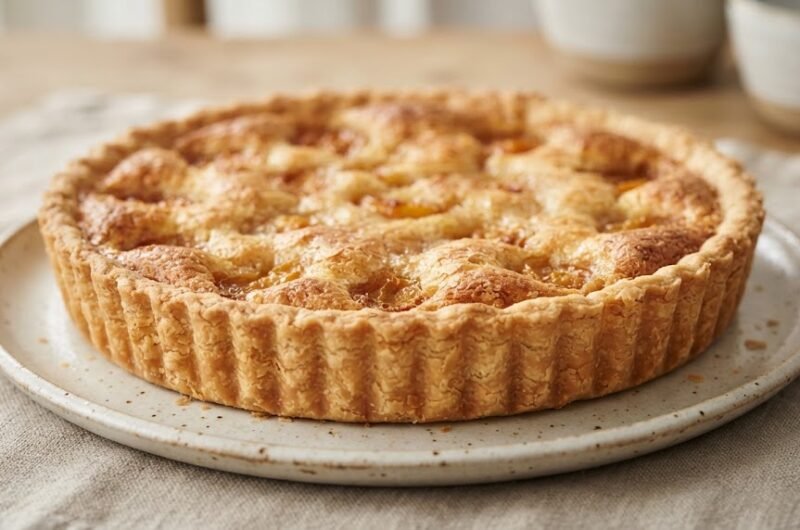
Delia Smith Shortcrust Pastry Recipe
Course: DessertsCuisine: British8
servings10
minutes30
minutes300
kcal40
minutesA classic British shortcrust pastry made with plain flour, butter and lard. It is light, crisp and versatile, making it suitable for pies, tarts, quiches and mince pies.
Ingredients
220g (7.8 oz) plain flour
55g (1.9 oz) butter, softened
55g (1.9 oz) pure lard, softened
A pinch of salt
2–3 tablespoons cold water, as needed
Directions
- Sift the plain flour and salt into a large mixing bowl.
- Add the softened butter and lard, then rub them into the flour with your fingertips until the mixture resembles fine breadcrumbs.
- Gradually add the cold water, using a knife to bring the mixture together into a dough.
- Gently shape the dough into a ball without kneading or overworking it.
- Wrap the pastry and refrigerate for about 30 minutes.
- Roll out on a lightly floured surface and use as required for your chosen pie, tart or pastry.
Notes
- For a sweet shortcrust pastry, add about 35g (1¼ oz) caster sugar to the flour and salt before rubbing in the butter and lard.
- Keep the pastry cool, handle it gently and add the water gradually, as you may not need the full amount.


