


 Rosie Fielding
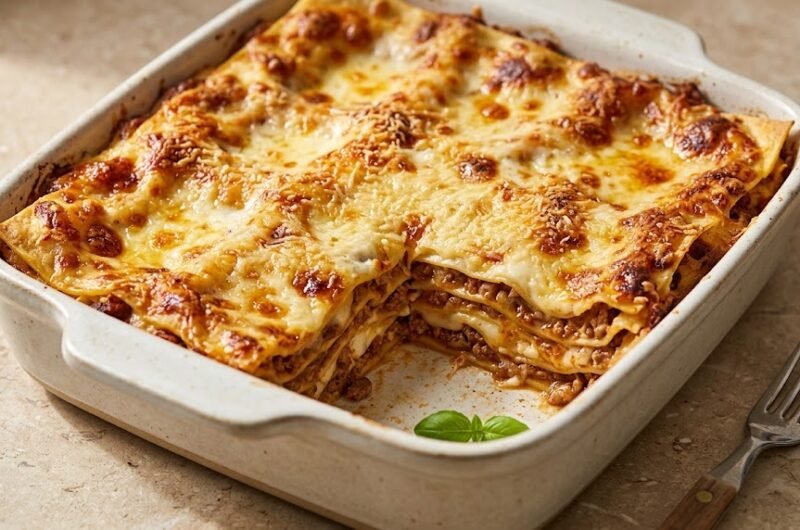
 Delia Smith’s Lasagne al Forno is the sort of dish that rewards a little patience. Rather than relying on a hurried meat sauce, this version builds flavour gradually with minced beef, pork, smoked pancetta, tomato, red wine and basil, then combines the ragù with a creamy white sauce, fresh pasta, mozzarella and Parmigiano Reggiano.
The recipe is adapted from Delia’s Complete How to Cook and serves six in its published form. It is also associated with Delia’s Cookery School material.
For an eight-serving version, allow plenty of time for the ragù. The oven does much of the work, but the finished lasagne is noticeably better when the meat sauce has been reduced until concentrated rather than left loose and watery.
Why You’ll Love This Delia Smith Lasagne al Forno
This is a substantial lasagne with several layers of flavour rather than simply meat, tomato and cheese.
- Slow-cooked ragù: Beef, pork and pancetta give the meat sauce depth and richness.
- Creamy white sauce: Milk, butter, flour and cream create a soft, luxurious layer between the pasta.
- Good balance of cheese: Mozzarella gives the interior its creamy melt, while Parmigiano Reggiano provides a savoury finish.
- Fresh pasta works beautifully: The original online version specifies fresh lasagne sheets, making assembly straightforward.
- Excellent for entertaining: The assembled dish can be prepared ahead and chilled or frozen before baking.
Ingredients You’ll Need
For the ragù
- 300g minced British beef (10.6 oz)
- 300g minced British pork (10.6 oz)
- 130g smoked pancetta (4.6 oz), finely sliced
- 3 tbsp extra-virgin olive oil, about 45ml (1.5 fl oz)
- 1 large onion, about 180g (6.3 oz), finely chopped
- 1 large garlic clove, crushed
- 530g Italian chopped tomatoes (18.7 oz)
- 4 tbsp sundried tomato paste, about 70g (2.5 oz)
- 100ml red wine (3.4 fl oz)
- Freshly grated nutmeg
- 3 tbsp finely chopped fresh basil
- Salt and freshly milled black pepper
For the cream sauce
- 1.1 litres milk (37 fl oz)
- 100g butter (3.5 oz), plus extra for greasing
- 65–70g sauce flour (2.3–2.5 oz)
- 115ml double cream (3.9 fl oz)
- Freshly grated nutmeg
- Salt and freshly milled black pepper
To assemble
- 400–475g fresh lasagne sheets (14–16.8 oz)
- 265g mozzarella (9.3 oz), diced
- 65–70g Parmigiano Reggiano (2.3–2.5 oz), freshly grated
Choosing the ingredients
Fresh lasagne sheets are particularly convenient here because they can be layered directly into the dish. If you use a different type of pasta, follow its packet instructions and make sure there is enough sauce to cook it properly.
Pancetta is worth keeping. It adds salt, fat and savoury depth to the ragù, while the combination of beef and pork gives the sauce a fuller texture than beef alone.
For the cheese, Parmigiano Reggiano is preferable to a generic pre-grated Parmesan because its flavour is concentrated enough to stand up to the rich ragù.
Equipment & Tools
You only need a few essential tools:
- Large frying pan – for browning the beef, pork and pancetta.
- Large ovenproof casserole dish – for slow-cooking the ragù.
- Sharp knife and chopping board – for preparing the onion, garlic, pancetta and basil.
How to Make Delia Smith Lasagne al Forno
1. Build the pancetta and onion base
Heat about one tablespoon of the olive oil in a large frying pan over medium heat. Add the finely chopped onion and cook for around 10 minutes, stirring occasionally, until it has softened without taking on much colour.
Add the finely sliced pancetta and crushed garlic. Continue cooking for about five minutes, allowing the pancetta to release some of its fat and the garlic to become fragrant.
Transfer this mixture to a large flameproof casserole.
2. Brown the beef and pork separately
Increase the heat under the frying pan and add another portion of the olive oil. Add the minced beef and cook until properly browned, breaking it apart as it cooks.
Move the beef into the casserole, then repeat with the pork, adding another little splash of oil if needed.
This extra browning stage is useful. The mince should look cooked and lightly browned rather than grey and steamed. Avoid overcrowding the pan, as that makes it much harder to develop good colour.
3. Slowly cook the ragù
Heat the casserole directly on the hob and mix together the browned meat, onion and pancetta.
Add the chopped tomatoes, sundried tomato paste, red wine, a generous grating of nutmeg, salt, pepper and about one tablespoon of the chopped basil.
Bring the mixture to a gentle simmer. Cover with a tight-fitting lid and transfer to an oven preheated to 140°C (275°F), Gas Mark 1.
Cook for 2 hours, removing the lid halfway through. The finished ragù should be noticeably reduced and thick, with only a small amount of liquid remaining. Stir in the remaining basil once it has finished cooking and check the seasoning. This slow oven cooking and reduction are central to the published method.
4. Make the cream sauce
While the ragù is approaching the end of its cooking time, put the milk, butter and sauce flour into a medium heavy-based saucepan. Add salt and pepper.
Set the pan over gentle heat and whisk continuously as the mixture warms. It will gradually thicken and eventually reach simmering point.
Once thickened, reduce the heat to its lowest setting and continue cooking for around 10 minutes, whisking or stirring from time to time. This gives the flour time to lose its raw taste.
Remove the pan from the heat. Add another good grating of nutmeg and stir in the double cream. Taste and adjust the seasoning.
The sauce should be smooth and creamy rather than stiff.
5. Assemble the layers
Butter an ovenproof dish measuring roughly 23cm square at the base and about 5cm deep.
Reserve two ladlefuls of the cream sauce for the top.
Spread roughly one quarter of the ragù across the base. Add about one quarter of the cream sauce, followed by some of the diced mozzarella. Cover with a single layer of lasagne sheets, trimming or breaking them where necessary.
Repeat the sequence until the ragù, white sauce, mozzarella and pasta have been used, finishing with a layer of pasta.
Spread the reserved cream sauce over the final pasta layer so that it is well covered. Finish with the grated Parmigiano Reggiano.
6. Bake, rest and serve
Heat the oven to 180°C (350°F), Gas Mark 4.
Place the lasagne on a reasonably high shelf and bake for 45–50 minutes, until the surface is bubbling and lightly golden and the pasta is tender.
If the top begins to colour too quickly, move the dish slightly lower in the oven.
Once baked, leave the lasagne to stand for 5–10 minutes before cutting. This short rest helps the layers settle and makes serving much easier.

Tips for Making Lasagne Successfully
The biggest difference between a good lasagne and a disappointing one is usually moisture control.
Reduce the ragù properly. The meat sauce should be thick before it goes anywhere near the pasta. If it is still visibly watery after two hours, give it a little more time uncovered.
Brown the mince in batches if necessary. Proper browning adds flavour and prevents the meat from simply simmering in its own juices.
Keep the white sauce smooth. Continuous whisking as the milk, flour and butter heat together is the key to avoiding lumps.
Cover the final pasta layer completely. Exposed pasta can dry out or become hard during the long bake.
Do not rush the resting time. Cutting straight into a bubbling lasagne makes it much more likely that the layers will slide apart.
Use fresh nutmeg. A small amount is enough, but freshly grated nutmeg gives the cream sauce a warmer, more rounded flavour.
Recipe Variations and Substitutions
These are adaptations, not part of Delia’s original recipe, but they work well if you need to adjust it.
No red wine? You can leave it out, although the finished ragù will have a slightly different depth. Avoid adding a large amount of extra liquid in its place because the sauce needs to finish thick.
No chicken livers: replace with an extra 230g of minced pork or beef; the flavour will be milder but still good.
Beef only: Minced beef can be used without pork, but the ragù will be leaner and less rich.
Fresh versus dried pasta: Fresh sheets are specified in the published recipe. If using dried sheets, make sure the sauce is sufficiently moist and follow the pasta manufacturer’s instructions.
Vegetarian version: This should be treated as a separate adaptation rather than the original Delia recipe. A vegetarian lasagne can use mushrooms, lentils or roasted vegetables, but those ingredients behave differently from the meat ragù and may require a different cooking method.
What to Serve With Lasagne al Forno
Because the lasagne is rich, the best accompaniments are fresh and relatively simple.
A crisp green salad with a sharp vinaigrette is an excellent choice. The acidity cuts through the cream, meat and melted cheese without competing with them.
You could also serve:
- Lightly dressed mixed leaves
- Rocket with lemon and olive oil
- Steamed green vegetables
- A modest portion of garlic bread
There is no need to crowd the plate with several heavy side dishes. A generous square of lasagne and something fresh alongside it is usually enough.

Approximate Nutrition
For the revised eight-serving quantity, one portion is approximately:
- Calories: 700–750 kcal
- Protein: 38–42g
- Carbohydrates: 55–65g
- Fat: 38–43g
- Fibre: 4–6g
- Sugar: 8–11g
- Salt: approximately 2–2.5g
These are estimates calculated from the revised ingredient quantities. Actual values will vary according to the fat content of the mince and pancetta, the type of pasta and cheese used, and how generously each portion is served.
Common Mistakes to Avoid
Watery lasagne
The most likely culprit is an under-reduced ragù. The meat sauce needs to be thick and concentrated before assembly. Removing the lid halfway through its oven cooking helps excess moisture evaporate.
Dry or hard pasta
This can happen when parts of the pasta are left uncovered. Make sure the sauces reach the edges and that the final pasta layer is completely coated with cream sauce.
Pale, bland ragù
Simply cooking mince in tomato sauce for a short time will not give the same concentrated flavour. Take the time to brown the meat and cook the ragù slowly.
Lumpy white sauce
Adding heat too aggressively or failing to whisk can cause uneven thickening. Keep the heat gentle and whisk continuously until the sauce becomes smooth.
Lasagne that collapses when served
Some movement is normal, but slicing immediately after baking makes the problem worse. Give the dish at least five to ten minutes to settle.
Can You Make This Lasagne Ahead?
Yes. This is one of the practical strengths of the recipe.
The ragù can be prepared ahead, cooled and refrigerated. The complete assembled lasagne can also be covered and kept chilled before baking. Delia Online specifically notes that the prepared dish can be kept covered in the refrigerator for a few days or frozen.
If making it ahead, assemble the dish only after the ragù and cream sauce have been prepared. Keep the dish properly chilled and bake it thoroughly before serving.
A chilled lasagne may require more time in the oven than one assembled and baked immediately, so judge doneness by the centre being piping hot, the pasta tender and the top bubbling.

Storage and Reheating
Cool leftover lasagne promptly and refrigerate it in a covered container.
For reheating, individual portions can be reheated until completely hot through. A larger quantity is best reheated in an ovenproof dish, loosely covered initially to prevent the cheese from becoming excessively dark.
The lasagne can also be frozen, either as a complete dish or in portions. If freezing, use a suitable freezer-safe container and allow frozen food to thaw safely before reheating unless you are following a method specifically designed for cooking from frozen.
Because this lasagne contains several dairy and meat components, it should not be left sitting at room temperature for prolonged periods.
Frequently Asked Questions
What is the difference between lasagna and lasagna al forno?
Lasagna is the general name for the layered pasta dish, while lasagna al forno specifically means lasagna that is baked in the oven. This Delia Smith version combines layers of fresh lasagne, slow-cooked meat ragù, creamy white sauce, mozzarella and Parmigiano Reggiano before baking until bubbling and golden.
How long does it take to make lasagna al forno?
This version takes approximately 3 hours 15 minutes, including preparation and cooking. The ragù needs around 2 hours of slow cooking, followed by assembling and baking the lasagne for about 45–50 minutes.
Can I freeze Lasagne al Forno?
Yes. Delia Online specifically notes that the prepared lasagne can be frozen. Use suitable freezer-safe packaging and thaw safely before reheating or baking where appropriate.
Why is my lasagne watery?
Usually the ragù has not reduced enough. The finished meat sauce should be thick and concentrated, with very little loose liquid. Too much moisture can also make the finished layers difficult to cut cleanly.
Can I use dried lasagne sheets?
The published version specifies fresh lasagne sheets. Dried sheets can be used as an adaptation, but check the packet directions and ensure there is enough sauce to cook them properly.
Can I use only beef instead of beef and pork?
You can, but it changes the character of the ragù. The original recipe uses both minced British beef and minced British pork, with pancetta providing additional richness.
How long should lasagne rest after baking?
Allow at least 5–10 minutes. This gives the hot sauces and pasta time to settle, making the dish easier to portion.
How do I know when the lasagne is cooked?
Look for a bubbling surface with light golden colouring. A knife inserted into the centre should meet tender pasta rather than resistance.
Can I double this recipe?
You can scale the ingredients, but a very large lasagne may cook unevenly. It is generally better to divide a doubled quantity between two suitable dishes rather than making one exceptionally deep dish.
Final Thoughts
This Delia Smith Lasagne al Forno is a recipe for cooks who appreciate what slow cooking can do. The ingredient list is familiar, but the method gives each component time to develop: the ragù becomes concentrated and savoury, the cream sauce turns smooth and rich, and the pasta binds everything together.
It is especially useful when cooking for family meals or entertaining because much of the preparation can be completed before the dish goes into the oven.
For the best result, concentrate on three things: brown the meat well, reduce the ragù thoroughly, and give the finished lasagne time to settle before serving.
Delia Smith Lasagne al Forno Recipe
Cuisine: Italian8
servings25
minutes2
hours50
minutes700
kcal3
hours15
minutesA rich and comforting Italian-style lasagne made with beef, pork, smoked pancetta, tomato and red wine ragù, layered with fresh pasta, creamy white sauce, mozzarella and Parmigiano Reggiano.
Ingredients
For the Ragù
300g minced British beef (10.6 oz)
300g minced British pork (10.6 oz)
130g smoked pancetta (4.6 oz), finely sliced
3 tbsp extra-virgin olive oil (about 45ml / 1.5 fl oz)
1 large onion (about 180g / 6.3 oz), finely chopped
1 large garlic clove, crushed
530g Italian chopped tomatoes (18.7 oz)
4 tbsp sundried tomato paste (about 70g / 2.5 oz)
100ml red wine (3.4 fl oz)
Freshly grated nutmeg
3 tbsp fresh basil (about 15g / 0.5 oz), finely chopped
Salt and freshly milled black pepper
For the Cream Sauce
1.1 litres milk (37 fl oz)
100g butter (3.5 oz)
65–70g sauce flour (2.3–2.5 oz)
115ml double cream (3.9 fl oz)
Freshly grated nutmeg
Salt and freshly milled black pepper
For Assembly
400–475g fresh lasagne sheets (14–16.8 oz)
265g mozzarella (9.3 oz), diced
65–70g Parmigiano Reggiano (2.3–2.5 oz), freshly grated
Directions
- Cook the pancetta and onion: Heat some of the olive oil in a large frying pan. Cook the onion for about 10 minutes until soft, then add the pancetta and garlic and cook for another 5 minutes. Transfer to a large ovenproof casserole.
- Brown the meat: Brown the minced beef in the frying pan, breaking it up as it cooks, then transfer it to the casserole. Repeat with the pork, adding a little more oil if necessary.
- Slow-cook the ragù: Add the tomatoes, sundried tomato paste, red wine, nutmeg, basil, salt and pepper. Bring to a gentle simmer, cover and cook at 140°C (275°F), Gas Mark 1, for 2 hours. Remove the lid halfway through cooking so the sauce can reduce. Stir in the remaining basil and adjust the seasoning.
- Make the cream sauce: Combine the milk, butter and flour in a heavy-based saucepan with seasoning. Heat gently, whisking continuously, until the sauce thickens. Continue cooking for about 10 minutes, then remove from the heat and stir in the cream and freshly grated nutmeg.
- Layer the lasagne: Butter a roughly 23cm (9-inch) square ovenproof dish. Layer the ragù, cream sauce, mozzarella and fresh lasagne sheets, repeating until the ingredients are used. Finish with pasta, cover with the reserved cream sauce and sprinkle over the Parmigiano Reggiano.
- Bake: Bake at 180°C (350°F), Gas Mark 4, for 45–50 minutes, or until bubbling, golden and the pasta is tender. Rest for 5–10 minutes before serving.
Notes
- Reduce the ragù thoroughly so the finished lasagne does not become watery.
- Brown the beef and pork well before combining them with the tomato mixture.
- Make sure the final pasta layer is completely covered with sauce.


[…] This recipe is ideal for a family dinner, a relaxed weekend meal or batch cooking for busy days. If you enjoy other comforting, satisfying Italian-style family meals, you may also like this Lasagne al Forno. […]