


 Rosie Fielding
 Delia Smith’s Dauphinoise potatoes recipe is a classic French-style potato gratin built around thinly sliced potatoes, cream, milk, garlic, butter and a little nutmeg. The result is a soft, rich potato dish with a lightly coloured surface and layers that become tender during a long, gentle bake.
The original recipe is published as Gratin Dauphinois and is listed as serving 3–4 people, with a cooking time of 1½ hours. It comes from Delia’s Complete Cookery Course.
This version is scaled to serve 5 people, making it a useful side dish for a family roast or a small dinner gathering.
Why You’ll Love This Delia Smith Recipe
Dauphinoise potatoes are not a quick side dish, but they reward patience. The preparation itself is straightforward, and the oven does most of the work.
- Rich without being overloaded with ingredients: potatoes remain the central flavour.
- A soft, creamy texture: the thin slices cook slowly in the cream and milk.
- No cheese is required: this keeps the character focused on potato, garlic and dairy.
- Excellent with roast dinners: especially beef, lamb or poultry.
- Easy to scale up: provided the potatoes are arranged in suitably sized dishes.
- Ideal for entertaining: much of the preparation can be organised before cooking.
Ingredients You’ll Need
For 5 servings
- 600g potatoes (21.2 oz), preferably King Edward or Désirée
- 1–2 small garlic cloves, crushed
- 200ml double cream (6.8 fl oz)
- 200ml milk (6.8 fl oz)
- 35g butter (1.2 oz), plus a little extra for greasing the dish
- Freshly grated nutmeg, to taste
- Salt, to taste
- Freshly milled black pepper, to taste

Choosing the potatoes
The potatoes need to hold together well enough to form neat layers while still becoming tender during the long bake. King Edward and Désirée are the varieties specified in the original recipe.
Slice them as evenly and thinly as possible. A mandolin can make this easier, although a sharp knife and careful cutting will also work.
Why both cream and milk?
The combination is important to the character of this particular recipe. Double cream provides richness, while milk lightens the mixture enough for it to flow around the potato layers.
For the closest result to the original Delia Smith recipe, it is best not to replace all of the cream with milk.
Garlic and nutmeg
The garlic should be crushed and distributed through the layers rather than added as a heavy paste in one place. Nutmeg is used sparingly: it should add a gentle aromatic note without dominating the potatoes.
How to Make Delia Smith Dauphinoise Potatoes
1. Heat the oven and prepare the dish
Preheat a conventional oven to 150°C (300°F), Gas Mark 2. Delia Online notes that her recipes are tested using conventional ovens; if using a fan oven, the temperature may need adjustment.
Butter a shallow gratin dish generously. Choose a dish large enough for the potato slices to sit in relatively even layers rather than being packed into an excessively deep pile.
2. Peel, slice and rinse the potatoes
Peel the potatoes and slice them very thinly. Place the slices in a bowl of cold water and move them around to remove some surface starch.
Drain them thoroughly, then dry them well with a clean tea towel or kitchen cloth. This step matters because excess water can dilute the cream and milk mixture.
3. Build the potato layers
Arrange a layer of potato slices in the prepared dish. Scatter over a little crushed garlic and season with salt and freshly ground black pepper.
Continue layering the potatoes and seasoning until everything is in the dish. Try to keep the layers reasonably even so they cook at a similar rate.
4. Add the cream and milk
Mix the double cream and milk together, then pour the mixture evenly over the potatoes.
Finish with a light grating of fresh nutmeg. The liquid should run down between the slices rather than simply sitting on top.
5. Dot with butter
Cut or pinch the butter into small pieces and scatter them across the surface.
These small flecks melt during baking and help enrich the top layers.
6. Bake slowly until tender
Place the dish on a high oven shelf and bake for about 1½ hours.
The potatoes are ready when a knife slides easily through the layers and the surface has taken on a gentle golden colour. If the potatoes still feel firm in the centre, they need longer.
Allow the dish to stand briefly before serving so the creamy layers can settle.

How to Scale the Recipe
This recipe makes 5 servings, but you can easily adjust it for a smaller or larger group.
For 6 people:
Use about 720g potatoes, 240ml cream, 240ml milk, and 40g butter.
For 8 people:
Use about 960g potatoes, 320ml cream, 320ml milk, and 55g butter.
For 10 people:
Simply double the recipe: use 1.2kg potatoes, 400ml cream, 400ml milk, and 70g butter.
For garlic, salt, pepper and nutmeg, you don’t need to be exact. Add them according to taste.
If you’re making a large batch, it’s better to use two shallow baking dishes rather than putting all the potatoes into one deep dish. The potatoes should be arranged in fairly even layers so they cook properly.
The cooking time may need to increase slightly for a larger batch. Start checking the potatoes with a sharp knife around the original cooking time. They’re ready when the knife slides easily through the centre.
Tips & Tricks
Dry the potatoes thoroughly. Rinsing removes some starch, but leaving the slices wet can make the finished gratin unnecessarily loose.
Keep the slices thin and consistent. Thick pieces may remain firm while the thinner ones become very soft.
Do not rush the oven temperature. This recipe is designed around slow cooking at a low temperature. Raising the heat substantially can brown the surface before the centre has softened properly.
Season between layers. This gives a more even result than trying to season only the cream mixture at the end.
Use a shallow dish. A very deep dish changes how the potatoes cook and may require additional time.
Check with a knife. Cooking time is a guide, but the most useful test is whether the blade passes easily through the centre without resistance.
Recipe Variations and Substitutions
The ingredients above describe the Delia Smith version. The following ideas are optional adaptations rather than part of the original recipe.
Use a different suitable potato
If King Edward or Désirée potatoes are unavailable, choose another potato that performs well in a baked gratin. Avoid making a substitution blindly if the variety is extremely waxy or behaves very differently during long cooking.
Add herbs
A small amount of thyme can complement potatoes and cream, but this changes the flavour profile of the original recipe.
Make a cheese-topped version
Grated cheese can be added to the surface for a more pronounced gratin crust. However, cheese is not part of the original Delia Smith ingredient list, so it should be treated as a variation rather than a required ingredient.
What to Serve with Dauphinoise Potatoes
Because these potatoes are rich, they work particularly well beside dishes with savoury juices or a relatively simple preparation.
Good choices include:
- Roast beef with a green vegetable
- Roast lamb with peas or green beans
- Roast chicken with a crisp salad
- Pork with lightly cooked seasonal vegetables
- A mushroom-based vegetarian main course
- Simply cooked carrots, cabbage or broccoli
For more chicken options, try serving them with Coronation Chicken when planning a cold buffet or a more relaxed lunch. The creamy potatoes can also make a comforting accompaniment to this Chicken Casserole.
A fresh, slightly bitter or sharp vegetable accompaniment can be particularly useful because it balances the richness of the cream.

Nutrition Information
The following figures are an approximate estimate per serving, based on the revised five-serving quantity. Values will vary according to the exact potatoes, dairy products and brands used.
- Calories: approximately 310 kcal
- Protein: approximately 5g
- Carbohydrates: approximately 29g
- Fat: approximately 20g
- Fibre: approximately 3g
- Sugar: approximately 4g
- Salt: varies according to how much salt is added
These figures are estimates rather than laboratory-tested values.
Common Mistakes to Avoid
Cutting the potatoes too thickly
Thick slices take longer to soften and can leave the centre unevenly cooked. Aim for thin, consistent slices.
Leaving excess water on the potatoes
After rinsing, dry the slices carefully. Water clinging to them can weaken the creamy mixture.
Overdoing the nutmeg
Fresh nutmeg has a strong aroma. A little supports the flavour; too much can overwhelm the potatoes.
Using an unsuitable dish
A dish that is too deep can slow the cooking considerably. A broad, shallow gratin dish gives the layers a better chance of cooking evenly.
Assuming the clock is the only test
Ovens vary. After around 1½ hours, test the centre with a knife. The potatoes should be completely tender.
Browning the top too aggressively
The finished dish should be cooked through, not simply dark on the surface. If your oven browns unevenly, keep an eye on the gratin while allowing enough time for the centre to soften.
Can You Make This Recipe Ahead?
For the best texture, it is sensible to assemble and bake the gratin close to serving time.
However, some preparation can be completed in advance. Delia Online’s guidance for making a larger quantity ahead suggests peeling, slicing and rinsing the potatoes, then keeping them submerged in water in a covered container in the refrigerator. The garlic can be mixed with the milk, cream and seasoning separately, while the buttered dish can also be prepared in advance.
When ready to cook, drain and dry the potatoes thoroughly, assemble the layers and bake.
If the dish is already cooked and needs warming, cover it loosely and reheat until thoroughly hot. Reheating may soften the surface further, so it is best not to overcook the potatoes initially.
Storage and Reheating
Cool leftover dauphinoise potatoes promptly and refrigerate them in a covered container.
Reheat only the portion you intend to eat, warming it thoroughly until piping hot throughout. A moderate oven is generally preferable to intense heat because it gives the centre time to warm without scorching the surface.
Freezing is possible in principle, but creamy potato dishes can change texture after freezing and thawing. If the texture of the freshly baked dish is your priority, refrigeration and timely reheating are the better options.
Always use normal food-safety practices when cooling, storing and reheating leftovers.
Frequently Asked Questions
Can I make Delia Smith Dauphinoise Potatoes ahead of time?
You can prepare several components ahead, including slicing and storing the potatoes appropriately and mixing the dairy ingredients separately. Assemble and bake the dish as close to serving as practical for the best texture.
What potatoes are best for this recipe?
The original recipe specifies good-quality King Edward or Désirée potatoes.
Can I use only milk instead of cream?
That would significantly change the character of the recipe. The original uses equal quantities of double cream and milk, and the cream contributes much of the dish’s richness.
Does Delia Smith’s Dauphinoise potatoes recipe contain cheese?
No cheese appears in the original ingredient list. Cheese can be added as an optional adaptation, but it is not part of the recipe being reproduced here.
How do I know when dauphinoise potatoes are cooked?
Insert a knife into the centre. It should pass through the potato layers easily, with no firm or crunchy pieces remaining.
Can I double the recipe?
Yes. Scale every ingredient proportionally and use appropriately sized baking dishes. A larger or deeper quantity may need additional oven time.
Why are my dauphinoise potatoes watery?
The potatoes may not have been dried sufficiently after rinsing, or the dish may have been removed before the potatoes had fully cooked and the layers had time to settle.
Conclusion
Delia Smith Gratin Dauphinoise Potatoes are a straightforward example of how a few carefully chosen ingredients can create an impressive side dish. Thinly sliced potatoes, cream, milk, garlic, nutmeg and butter are given plenty of time to cook together slowly, producing soft layers and a rich finish.
It is a particularly good recipe for roast dinners and relaxed entertaining, provided you allow the full cooking time and pay attention to the thickness and dryness of the potato slices.
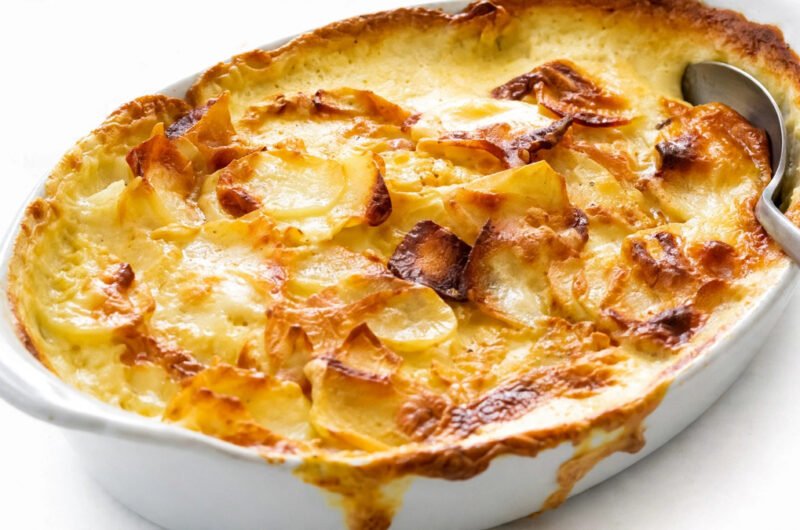
Delia Smith Dauphinoise Potatoes Recipe
Course: StartersCuisine: French5
servings20
minutes1
hour30
minutes310
kcal1
hour50
minutesA classic French-style potato gratin made with thinly sliced potatoes layered with garlic, cream, milk, butter and a touch of nutmeg. The potatoes are baked slowly until completely tender and lightly golden on top.
Ingredients
600g potatoes (21.2 oz), preferably King Edward or Désirée
1–2 small garlic cloves, crushed
200ml double cream (6.8 fl oz)
200ml milk (6.8 fl oz)
35g butter (1.2 oz), plus extra for greasing the dish
Freshly grated nutmeg, to taste
Salt, to taste
Freshly milled black pepper, to taste
Directions
- Preheat the oven to 150°C (300°F), Gas Mark 2. Butter a shallow gratin dish.
- Peel the potatoes and slice them very thinly. Rinse the slices in cold water, then drain and dry them thoroughly.
- Arrange a layer of potatoes in the prepared dish. Add a little crushed garlic, salt and black pepper. Continue layering until all the potatoes are used.
- Mix the double cream and milk together, then pour evenly over the potatoes. Add a light grating of nutmeg.
- Dot the surface with the butter.
- Bake for approximately 1 hour 30 minutes, until the potatoes are completely tender when tested with a knife and the top is lightly golden.
Notes
- Slice the potatoes as evenly as possible to ensure they cook at the same rate.
- Dry the potatoes thoroughly after rinsing to avoid a watery gratin.
- Do not increase the oven temperature too much, as the centre needs time to become tender.
- The original Delia Smith recipe does not include cheese; adding it would be an optional variation.


[…] Dauphinoise Potatoes […]
[…] into a jacket potato or Dauphinoise Potatoes for a simple, satisfying […]